
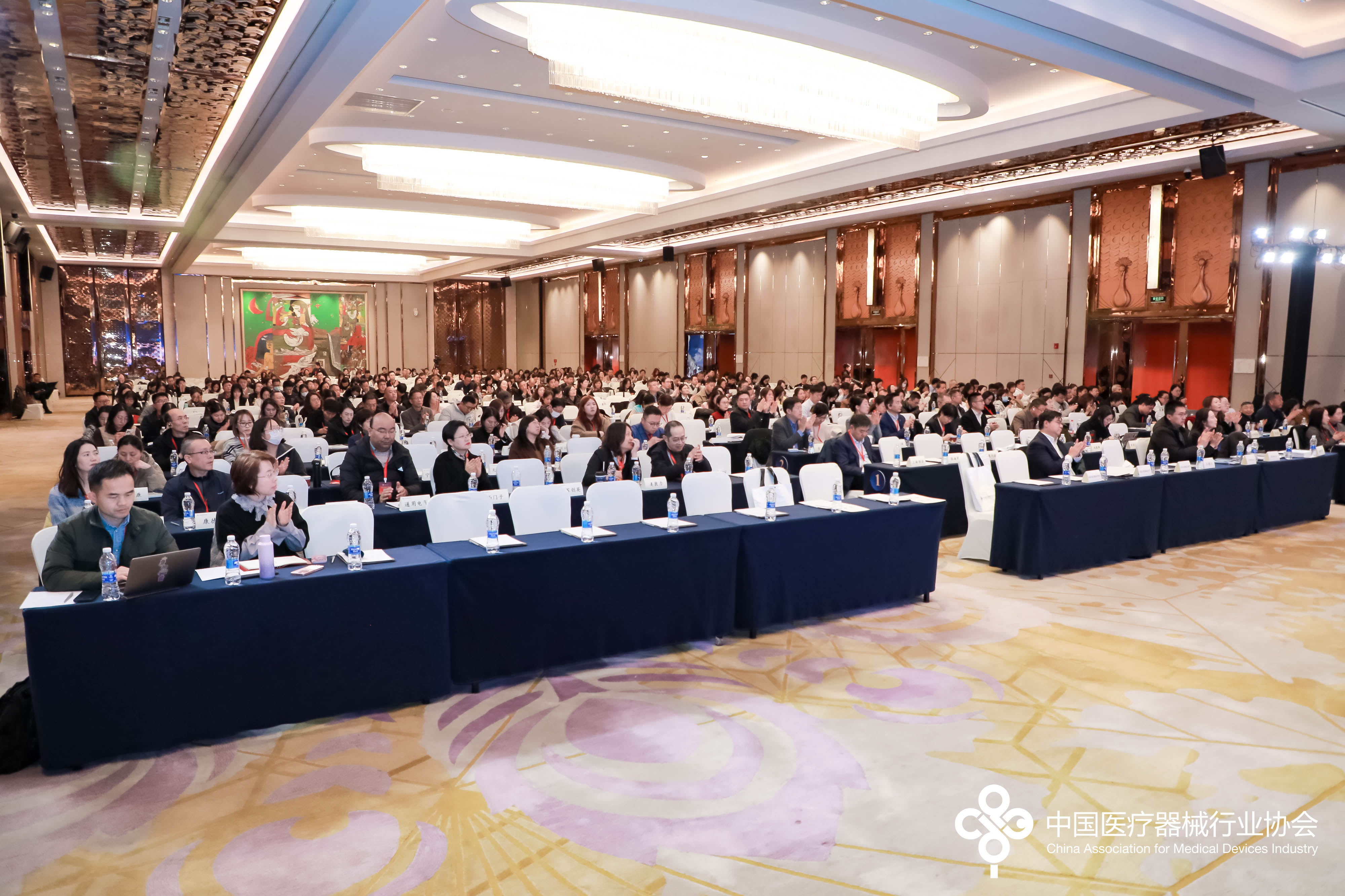
On the afternoon of March 18, 2026, the 2026 Annual Policy Conference of the China Association for Medical Devices Industry (CAMDI) was successfully held. The conference brought together nearly 600 leaders from industry regulatory authorities, authoritative experts, and enterprise representatives, who conducted in-depth interpretation and discussion of the latest policies, seizing the new opportunities at the outset of the 15th Five-Year Plan, and charting a new blueprint for the future development of the industry.
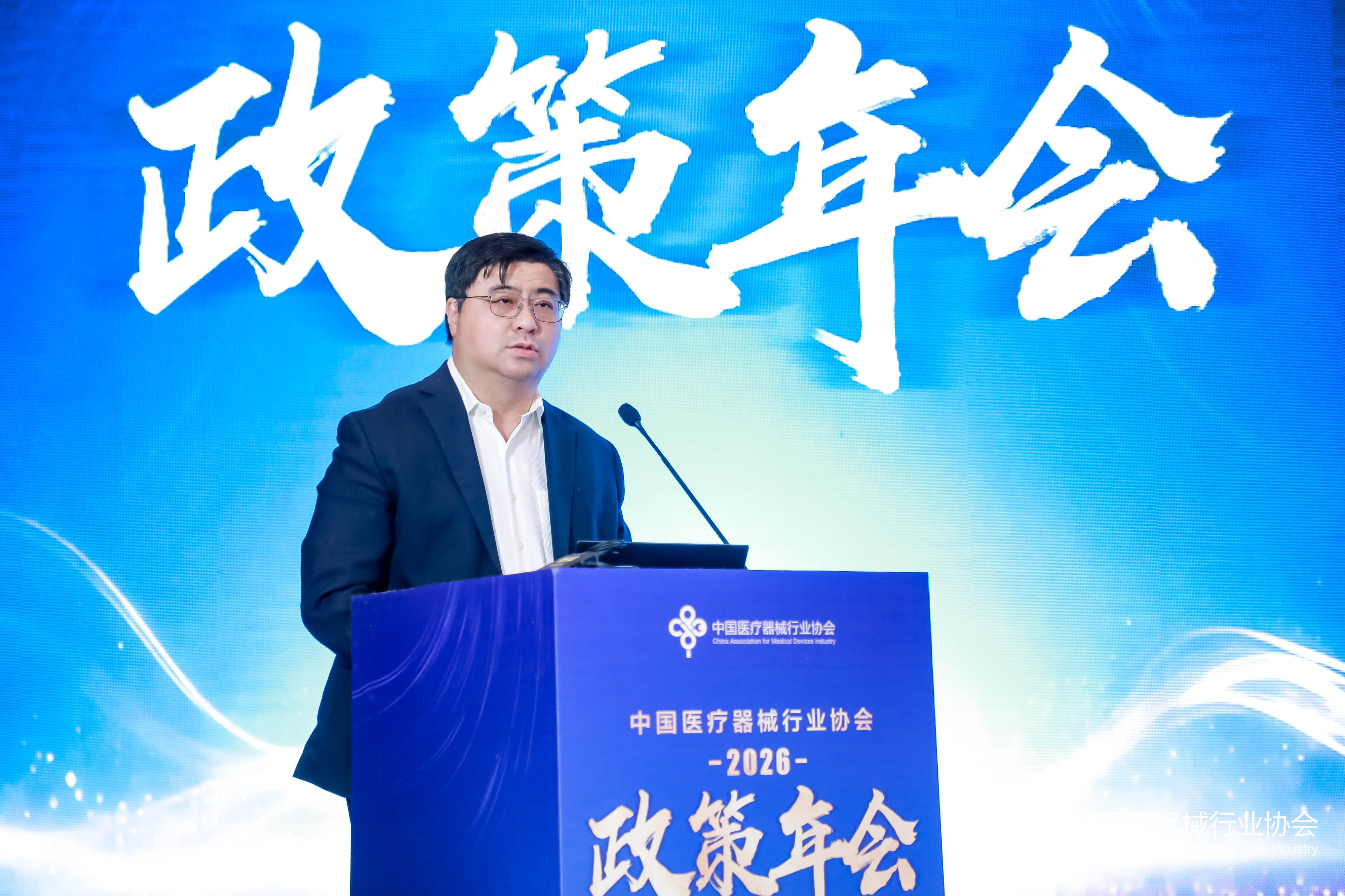
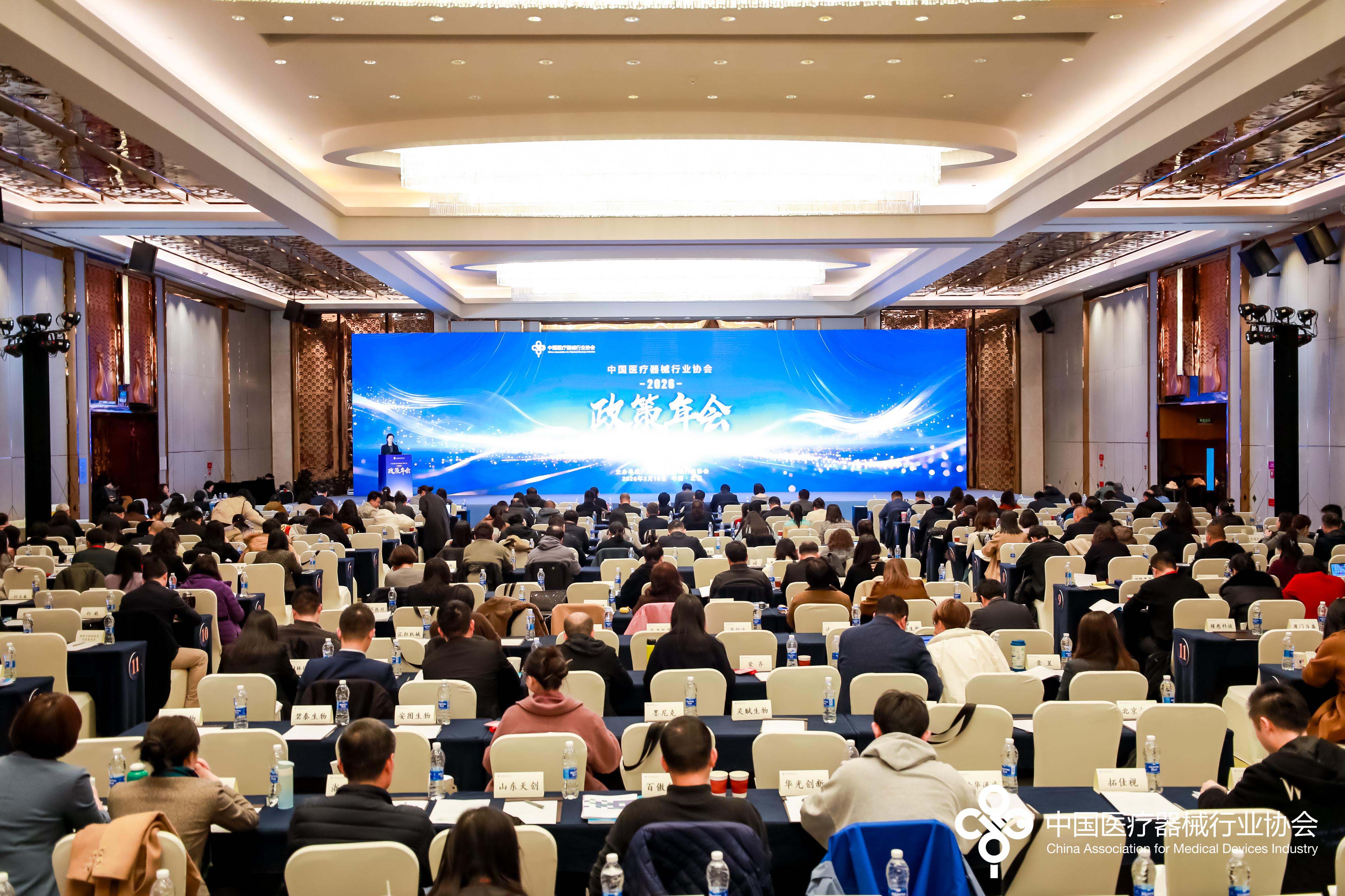 Yuan Peng, Deputy Head of the Department of Medical Device Registration of the National Medical Products Administration (NMPA), Wang Xin, Deputy Head of the Department of Medical Device Regulation of the NMPA, representatives from the Consumer Goods Industry Department of the Ministry of Industry and Information Technology (MIIT), representatives from the Department of Outward Investment and Economic Cooperation of the Ministry of Commerce (MOFCOM), and Tu Jiying, Division Head of the Department of Medical Service Management of the National Healthcare Security Administration (NHSA), attended the conference. The conference was presided over by Yang Xiaofang, Secretary General of CAMDI.
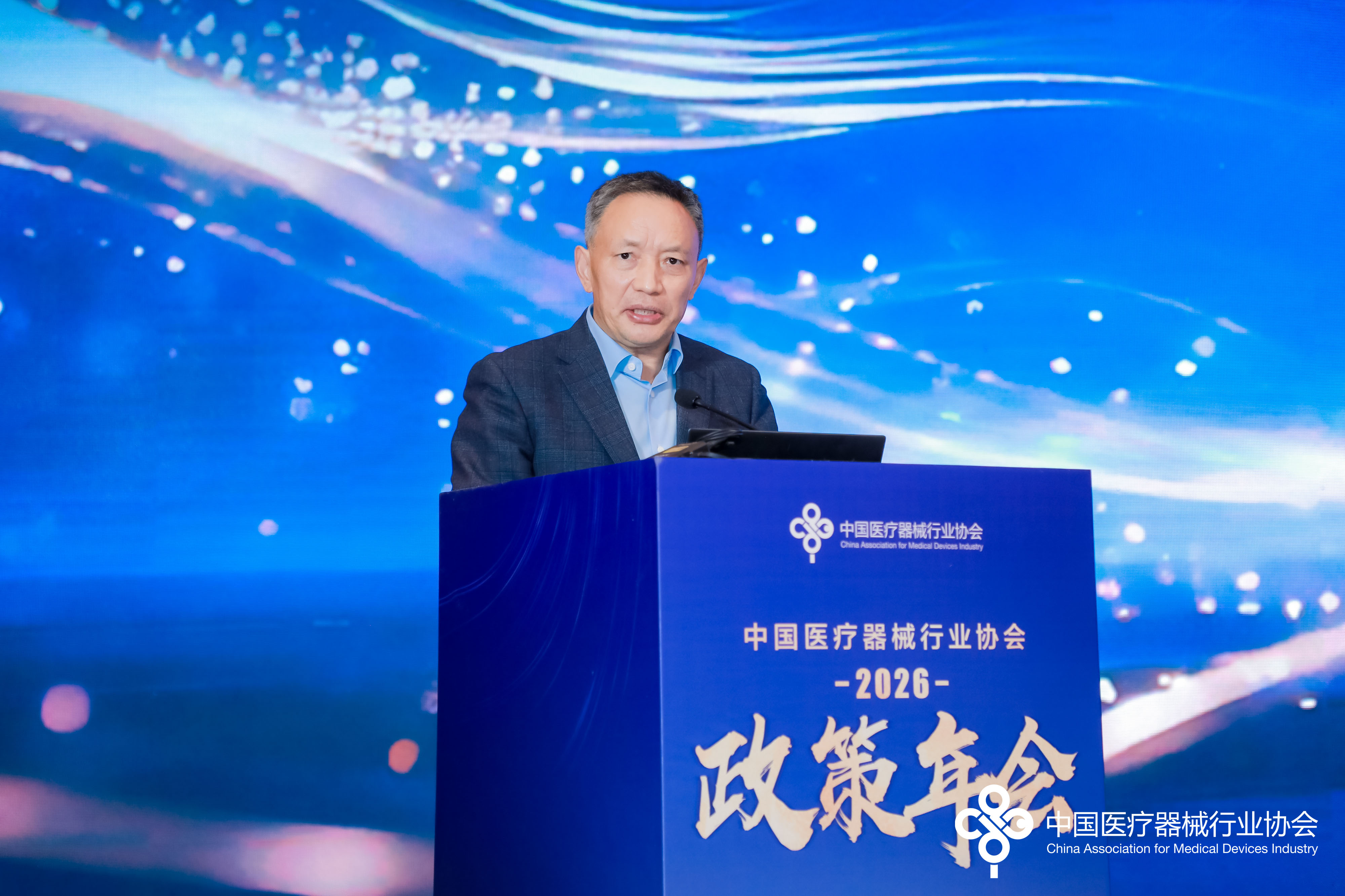
At 1:30 p.m., the conference opened in a lively atmosphere. CAMDI President Jiang Deyuan first delivered an opening address. He extended sincere welcome to all leaders, guests, and member representatives in attendance, and expressed heartfelt gratitude to all members for their support and participation during CAMDI's leadership re-election. President Jiang noted that the current year marks the inaugural year of the 15th Five-Year Plan, during which China's medical device industry is experiencing rapid growth in scale, a steady improvement in international market competitiveness, and continuous refinement of industrial policies - the industry is facing unprecedented opportunities and challenges. He emphasized that having leaders from relevant ministries and commissions present at this conference to deliver in-depth policy interpretations for member enterprises is an extremely rare learning and communication opportunity, and he expressed the hope that the attending representatives would seize the occasion to gain a deeper understanding of policy directions. Finally, President Jiang stated that member enterprises are an important cornerstone of CAMDI's development, and CAMDI will listen to the opinions and suggestions of enterprises through multiple channels to consolidate the foundation for CAMDI's future work.
As the highlight of this year's conference, the 2026 Annual Policy Conference kept its finger firmly on the pulse of the industry, with a compact agenda and substantive content. In the subsequent keynote address session, leaders from relevant national ministries and commissions delivered major policy interpretations to the attending representatives.
Yuan Peng, Deputy Head of the Department of Medical Device Registration of the NMPA, provided the attending representatives with a detailed interpretation of the "Current Status of Medical Device Registration Administration and Key Tasks for 2026." Deputy Head Yuan elaborated from three perspectives: data related to medical device registration, the current status of medical device registration administration, and the key tasks for medical device registration administration in 2026, systematically reviewing with detailed data the achievements and progress of China's medical device registration administration in 2025. He emphasized that in 2026, the Department of Medical Device Registration will make solid progress in continuously improving the regulatory framework for medical devices, encouraging industrial innovation and high-quality development, strengthening full-process oversight, accelerating the improvement of the regulatory support system, and enhancing the level of smart regulation.
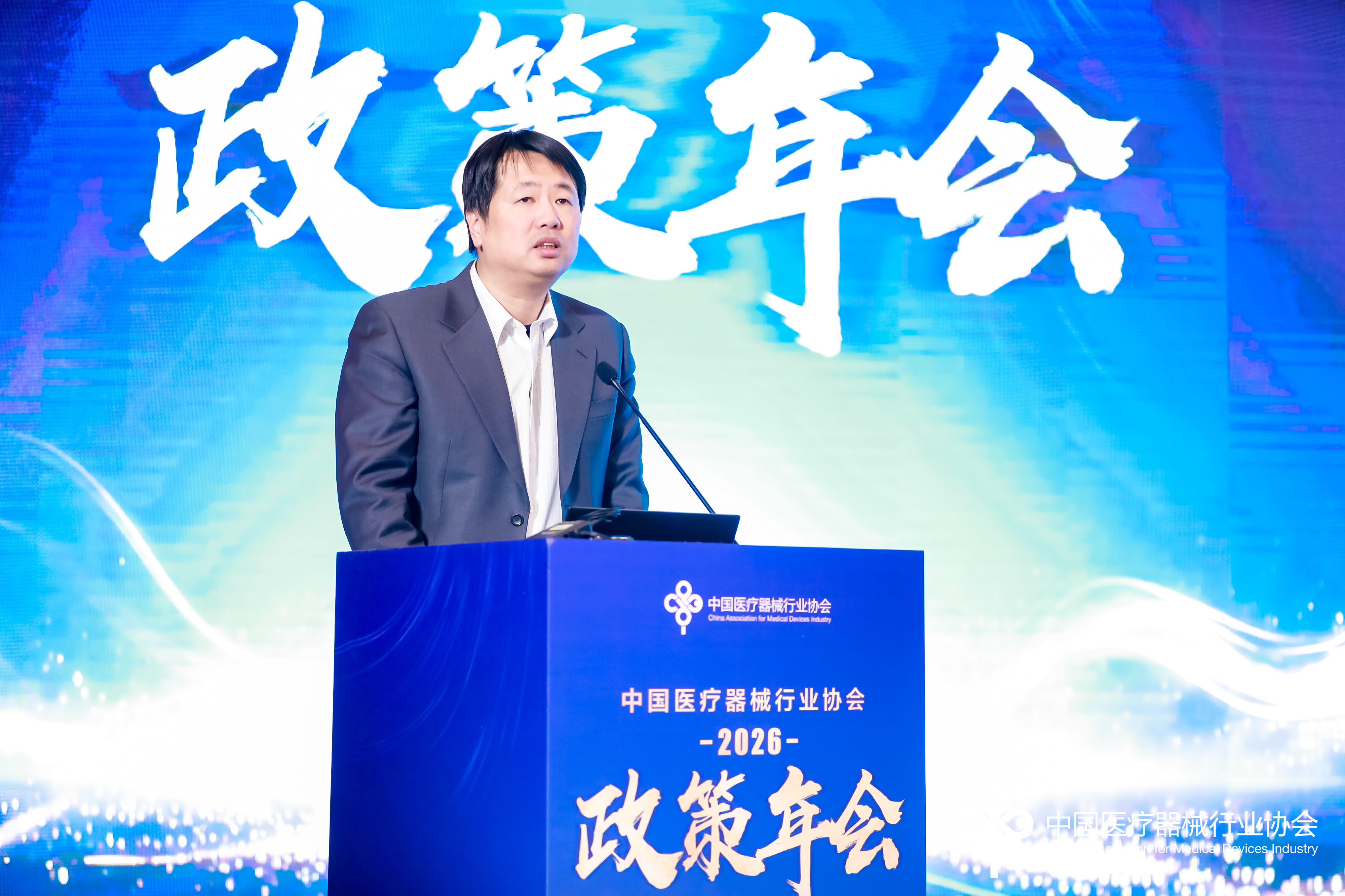
Wang Xin, Deputy Head of the Department of Medical Device Regulation of the NMPA, provided a detailed presentation on the "Key Arrangements for Post-Market Regulation of Medical Devices in 2026," emphasizing continued efforts along four dimensions: "diligence and dedication - building a robust safety barrier across the entire chain; diversified co-governance - comprehensively strengthening risk handling and case investigation and prosecution efforts; integrity and innovation - solidifying the foundation for high-quality development across all areas; and multi-dimensional co-construction - building a new pattern of co-governance and shared benefits across society," aiming to comprehensively consolidate the safety baseline for medical devices and promote the high-quality development of the industry. Deputy Head Wang Xin noted that in terms of specific measures, efforts will focus on advancing in-depth risk consultation to improve quality and efficiency, implementing the most stringent regulation over key products, and strictly upholding the quality and safety baseline in key aspects. He then cited as examples the regulation of innovative medical device products such as brain-computer interfaces, medical robots, and high-end medical imaging equipment, and elaborated on how to conduct fundamental and innovative supervisory work that supports the high-quality development of medical devices, to effectively enable industrial innovation through scientific regulation and ensure the safe and effective use of medical devices by the public.
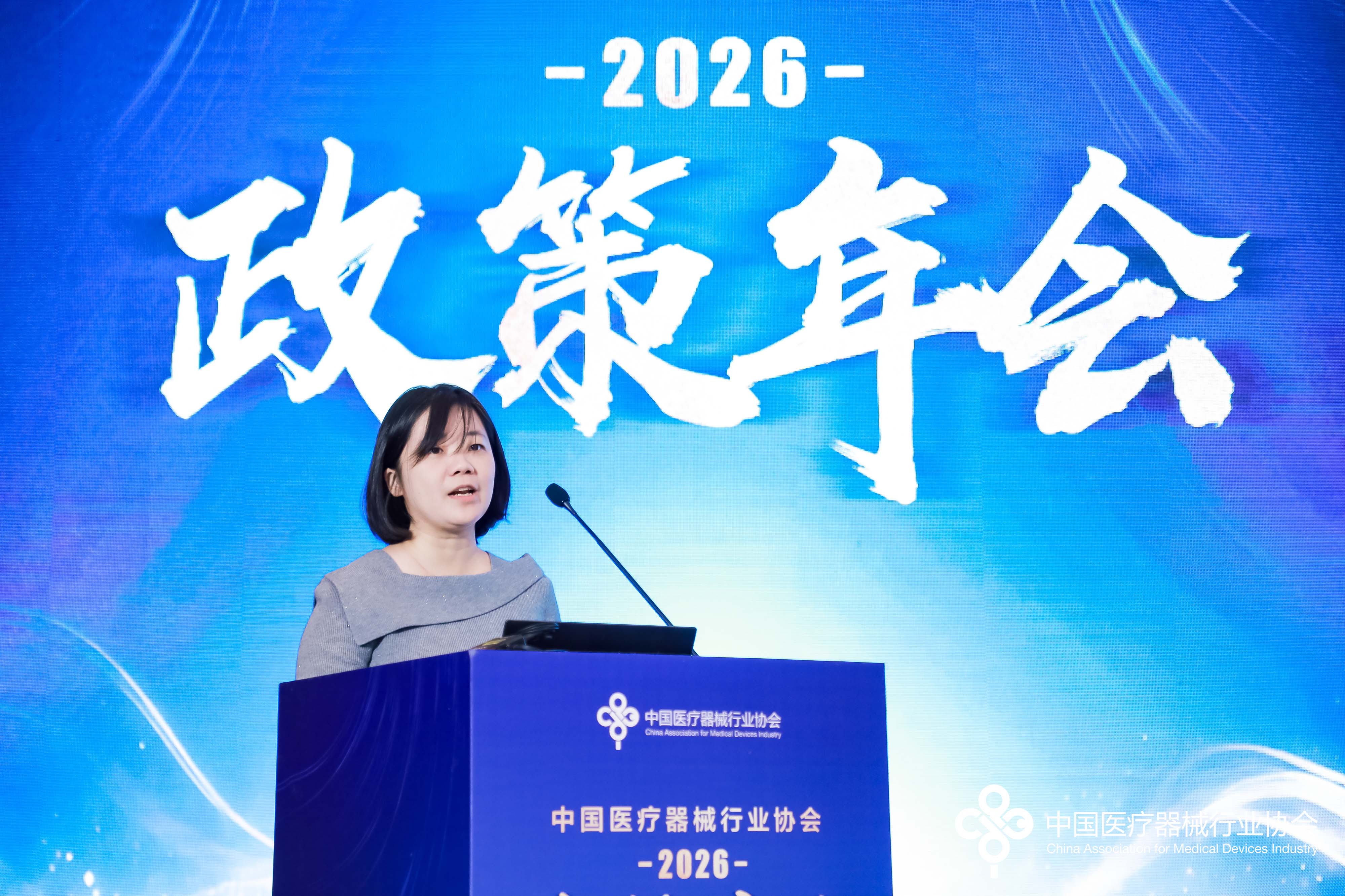
Tu Jiying, Division Head of the Department of Medical Service Management of the NHSA, delivered a presentation titled "An Overview of the Policies on the 'Three Lists' of Medical Insurance" to the participants. Division Head Tu provided a detailed explanation of the policy connotations of the "Three Lists," noting that the management focus of the scope of medical insurance reimbursement has gradually shifted from the traditional "Three Lists" toward a more practice-oriented framework, namely pharmaceuticals, medical service items, and medical consumables. She further illustrated, through comprehensive data and case analyses, how medical insurance policies are driving the development of the medical device industry from the perspective of reimbursement.
The successfully convened 2026 Annual Policy Conference provided authoritative policy guidance and a clear action roadmap for the entire industry in the new year and beyond. Participating representatives expressed that the conference was highly informative and strongly instructive, strengthening their confidence in pursuing development amid transformation.
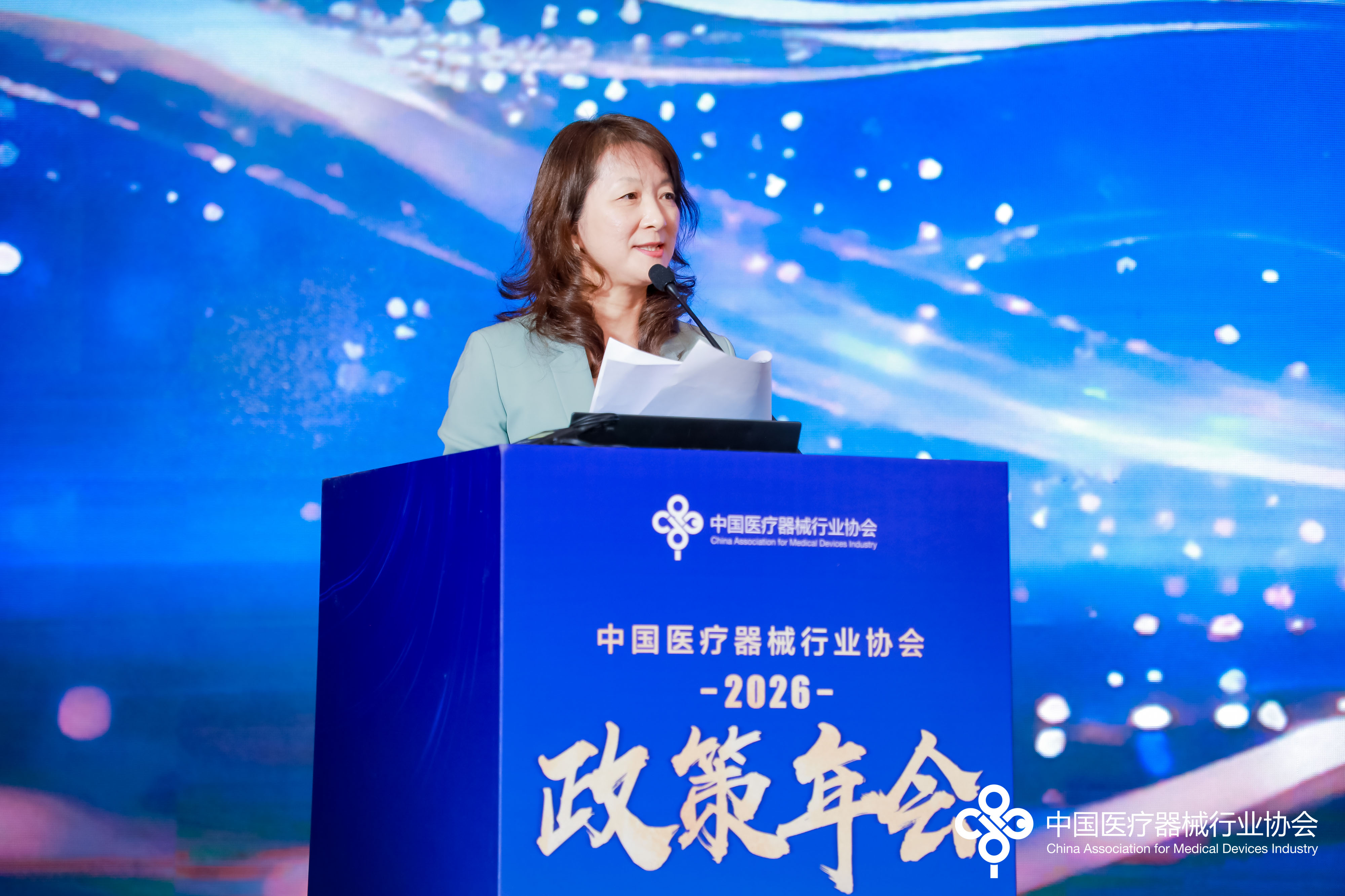
▲ China Association for Medical Devices Industry
Secretary General Yang Xiaofang
At 1:30 p.m., the conference opened in a lively atmosphere. CAMDI President Jiang Deyuan first delivered an opening address. He extended sincere welcome to all leaders, guests, and member representatives in attendance, and expressed heartfelt gratitude to all members for their support and participation during CAMDI's leadership re-election. President Jiang noted that the current year marks the inaugural year of the 15th Five-Year Plan, during which China's medical device industry is experiencing rapid growth in scale, a steady improvement in international market competitiveness, and continuous refinement of industrial policies - the industry is facing unprecedented opportunities and challenges. He emphasized that having leaders from relevant ministries and commissions present at this conference to deliver in-depth policy interpretations for member enterprises is an extremely rare learning and communication opportunity, and he expressed the hope that the attending representatives would seize the occasion to gain a deeper understanding of policy directions. Finally, President Jiang stated that member enterprises are an important cornerstone of CAMDI's development, and CAMDI will listen to the opinions and suggestions of enterprises through multiple channels to consolidate the foundation for CAMDI's future work.
▲ China Association for Medical Devices Industry
President Jiang Deyuan
As the highlight of this year's conference, the 2026 Annual Policy Conference kept its finger firmly on the pulse of the industry, with a compact agenda and substantive content. In the subsequent keynote address session, leaders from relevant national ministries and commissions delivered major policy interpretations to the attending representatives.
Yuan Peng, Deputy Head of the Department of Medical Device Registration of the NMPA, provided the attending representatives with a detailed interpretation of the "Current Status of Medical Device Registration Administration and Key Tasks for 2026." Deputy Head Yuan elaborated from three perspectives: data related to medical device registration, the current status of medical device registration administration, and the key tasks for medical device registration administration in 2026, systematically reviewing with detailed data the achievements and progress of China's medical device registration administration in 2025. He emphasized that in 2026, the Department of Medical Device Registration will make solid progress in continuously improving the regulatory framework for medical devices, encouraging industrial innovation and high-quality development, strengthening full-process oversight, accelerating the improvement of the regulatory support system, and enhancing the level of smart regulation.
▲ National Medical Products Administration
Deputy Head of the Department of Medical Device Registration, Yuan Peng
Wang Xin, Deputy Head of the Department of Medical Device Regulation of the NMPA, provided a detailed presentation on the "Key Arrangements for Post-Market Regulation of Medical Devices in 2026," emphasizing continued efforts along four dimensions: "diligence and dedication - building a robust safety barrier across the entire chain; diversified co-governance - comprehensively strengthening risk handling and case investigation and prosecution efforts; integrity and innovation - solidifying the foundation for high-quality development across all areas; and multi-dimensional co-construction - building a new pattern of co-governance and shared benefits across society," aiming to comprehensively consolidate the safety baseline for medical devices and promote the high-quality development of the industry. Deputy Head Wang Xin noted that in terms of specific measures, efforts will focus on advancing in-depth risk consultation to improve quality and efficiency, implementing the most stringent regulation over key products, and strictly upholding the quality and safety baseline in key aspects. He then cited as examples the regulation of innovative medical device products such as brain-computer interfaces, medical robots, and high-end medical imaging equipment, and elaborated on how to conduct fundamental and innovative supervisory work that supports the high-quality development of medical devices, to effectively enable industrial innovation through scientific regulation and ensure the safe and effective use of medical devices by the public.
▲ National Medical Products Administration
Deputy Head of the Department of Medical Device Regulation, Wang Xin
Tu Jiying, Division Head of the Department of Medical Service Management of the NHSA, delivered a presentation titled "An Overview of the Policies on the 'Three Lists' of Medical Insurance" to the participants. Division Head Tu provided a detailed explanation of the policy connotations of the "Three Lists," noting that the management focus of the scope of medical insurance reimbursement has gradually shifted from the traditional "Three Lists" toward a more practice-oriented framework, namely pharmaceuticals, medical service items, and medical consumables. She further illustrated, through comprehensive data and case analyses, how medical insurance policies are driving the development of the medical device industry from the perspective of reimbursement.
▲ National Healthcare Security Administration
Division Head of the Department of Medical Service Management, Tu Jiying
The successfully convened 2026 Annual Policy Conference provided authoritative policy guidance and a clear action roadmap for the entire industry in the new year and beyond. Participating representatives expressed that the conference was highly informative and strongly instructive, strengthening their confidence in pursuing development amid transformation.